Global disruptions, smart terminals & green horizons: What we learned at the CHESSCON Conference in 2025

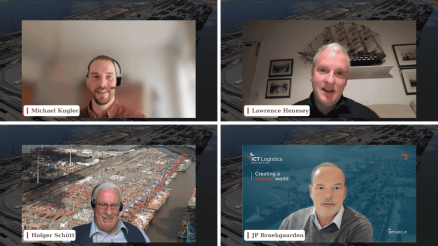
What do James Bond car chases, data-driven electrification, and modular automation platforms have in common? They all made an appearance, metaphorically or literally, at this year’s conference. The virtual conference was attended by participants from 23 countries across five continents and offered a compelling glimpse into the future of terminal operations, logistics resilience, and sustainable port management.
Macroeconomic insights with a dash of dry humor
Dr. Jan Hoffmann (The World Bank) opened the conference with a comprehensive macroeconomic analysis, rich in historical shipping data, humor, and real-world relevance. His presentation covered:
- Long-term positive trends in global logistics: from reduced port stay times to the increased participation of developing nations in global trade.
- A sharp critique of consolidation in shipping, warning of decreasing competition and its implications for shippers.
- A brilliant breakdown of freight rate volatility during the pandemic and the Red Sea crisis, visualized through microeconomic supply and demand curves - economics, but make it cinematic.
- Four pivotal transitions that will shape the future were also discussed: energy, vertical integration, geopolitical uncertainty, and digitalization.
His takeaway? “Technological progress will never again be as slow as it is today.” In short, if you're not already adapting, you're falling behind.
Smart equipment in action: Rewriting ECS Logic
Mr. JP Broekgaarden (ICT Group) introduced the audience to SmartECS, a new generation agnostic equipment control system designed to orchestrate container terminal operations flexibly and -neutrally with respect to vendors.
Key highlights included:
- Customer experiences and practical examples with ECT Rotterdam, PSA Antwerp and Hutchinson Ports Hong Kong have been the inspiration for the development of SmartECS which integrates with both older systems and modern automation.
- The concept of breaking vendor lock-in via a unified software architecture and connector platforms.
- A demo simulation showcasing SmartECS interfacing with Navis N4 and demonstrating the real-time coordination of AGVs, ASCs, and cranes in a virtual terminal.
- Ongoing proofs of concept with autonomous terminal trucks (ATTs) and CHESSCON’s digital twin environment, emphasizing rapid deployment and hybrid testing capabilities.
His conclusion: Smart terminal operations don’t just improve performance, they also future-proof your stack.
Electrification meets simulation: Bridging the knowledge gap
Dr. Lawrence Henesey (akquinet port consulting) presented actionable insights from consulting work with major terminal operators like APMT and Eurogate, focusing on sustainability through simulation.
He spotlighted:
- Increasing demand for emulation and digital twin technologies across medium-sized terminals.
- Simulation-based approaches to electrification strategies, including optimal charging infrastructure placement and carbon impact modeling
- Trends in terminal automation and energy transition, especially for smaller ports striving for cost-effective decarbonization.
This rising demand is not only reflected in Europe. AKQUINET's port team recently secured a major emulation project in the Middle East, which demonstrates that simulation has become a globally sought-after tool for planning and performance optimization.
From AGV research in Busan to digital twin deployments in Hamburg, Lawrence made one thing clear: Simulation is not a luxury, it’s a necessity for modern terminals.
Presentation Slides
| Title | Speaker | Topic Overview |
|---|---|---|
| Electrification Simulation Software and Port Trends | Dr. Lawrence Henesey | Dr. Lawrence Henesey presents innovative solutions for port electrification using the Electrification Simulation Software. His talk highlights how ports can navigate the transition to electric-powered operations with data-driven strategies, optimized charging cycles, and seamless integration of electric equipment — all aimed at boosting efficiency and reducing environmental impact. |
|
Global Trends in Maritime Logistics
|
Dr. Jan Hoffmann
|
The presentation showcases data and insights on trade, shipping, and logistics, depicting long-term – mostly positive – trends. Then came Covid and other supply disruptions, and many of these trends were interrupted. He presents an analysis of demand/supply dynamics that may explain the increasing volatility of shipping markets. For the future, there are indications that some positive trends will resume the previous long-term trajectory. However, the industry will also have to adjust to new realities. |
|
Creating a smarter world
|
Mr. JP Broekgaarden
|
SmartECS - A transformative solution for container handling operations. SmartECS, short for Smart Equipment Control System, represents a significant advancement in the realm of equipment management. At its core, SmartECS is an Equipment Control System (ECS) designed to orchestrate and optimise the various equipment and processes in container terminals.
|
We hope these resources continue to inform and inspire your work.
From the chatroom trenches
The conference wasn’t just a lecture; it was a lively exchange. In the chat and Q&A:
- Questions revolved around port automation trade-offs, integration standards like TIC 4.0, and transparency in MTBF (mean time between failures) data.
- Lively debates emerged on efficiency versus productivity, especially in the context of decarbonization.
- The open floor discussion touched on World Bank investment perspectives, rising protectionism and tariffs, and how global uncertainty shapes infrastructure planning.
Looking ahead: From mooring lines to machine learning
In a closing teaser, the CHESSCON team urged participants to keep looking forward. With decarbonization goals (like the EU’s Fit for 55) looming and AI, blockchain, and augmented reality entering port technology, the next decade promises radical transformation.
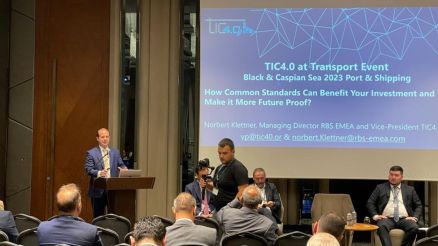
As Norbert Klettner concluded: “We used to strive for the highest productivity—now we're aiming for efficiency that fits the rhythm of modern global trade.”