Step-by-step digital twin technology for container terminals: How to go digital with few resources

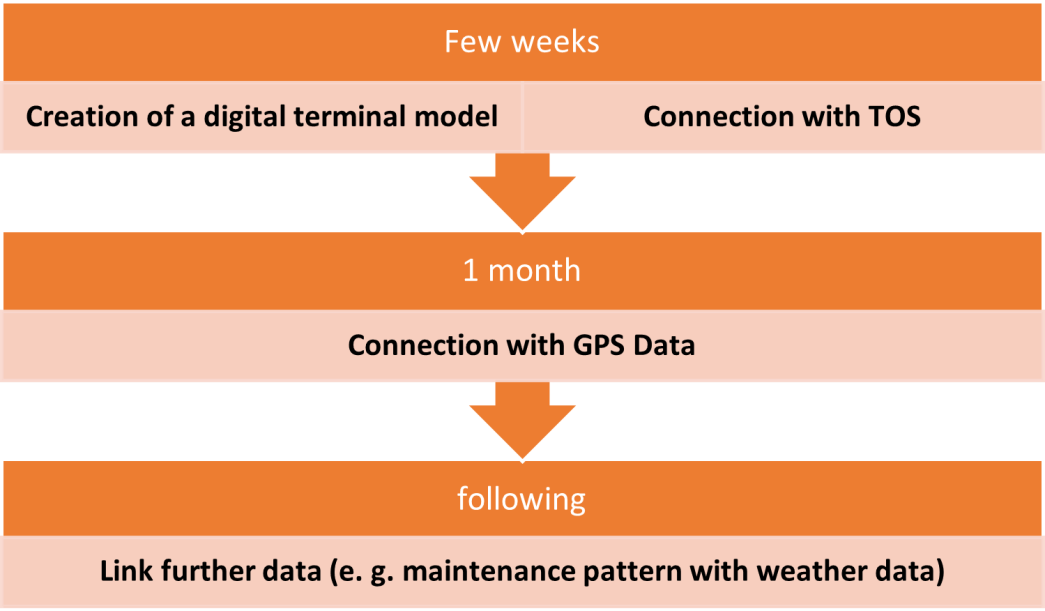
Digital twins offer promising opportunities to improve operating processes at sea terminals. Such a digital representation is realisable not only for large facilities, but also for smaller ones, because integration is even possible with limited data. A basic digital twin “light” can be usually implemented in a few weeks and expanded gradually. AKQUINET supports terminals in digital ports logistics with solutions, often based on the port simulation & emulation software CHESSCON. In this blogpost we present a roadmap to digital twin technology suitable for small and medium-sized terminals. Read more about how digital models can be used to optimise key processes such as maintenance or operations management.
Author: Michael Kugler, AKQUINET
Introduction: Definition and functions of a digital twin for a terminal
A digital twin is a virtual representation of the physical terminal and serves as an instrument for simulation and analyses of processes. This digital model always consists of several applications.
Data is essential to the creation of a digital twin. When setting it up, data from different sources is integrated layer by layer. The data is merged in a data lake, which the digital twin software accesses in a targeted manner. Based on the information provided, terminal operators can simulate and analyse operational processes and conduct other big data use cases, such as predictive maintenance.
Integrating a digital twin “light”
Collecting and processing data at the terminal is a costly process that not every container terminal operator is willing or capable to fund. But even without a large database, it is possible to deploy a digital twin economically on a smaller scale and gradually expand it. Our experts give insights on a typical approach when implementing a container terminal digital twin, starting with a minimum amount of data:
CHESSCON real-time view “light” with the Terminal Operating System (TOS)
The first step is to create a virtual model of the terminal. This can be done by AKQUINET. Our CHESSCON system has the capability for real-time visualization and data analysis even with a small amount of data provided exclusively by the Terminal Operating System (TOS).
Integration Layer by Layer
The digital representation will be expanded according to the customer’s requirements with different data in layers. This procedure is a common one:
1. Easy start: Data connection to the Terminal Operating System (TOS)
The digital twin “light” can be connected with the Terminal Operating System (TOS) – almost “plug and play” without changing the system, using available data from it’s equipment control system. This can be data sent between TOS and Container Handling Equipment (CHE) such as yard cranes, quay cranes, reach stackers, etc. For instance, events captured by the TOS such as container drop-off or pick-up are visualized based on real-time data, whilst driving paths between two events may be simulation by CHESSCON, based on an underlaying traffic network.
2. Gradual expansion: Device locations
The terminal data from the TOS can be combined with, e.g. GPS data from external sources on the CHE – without requiring architectural changes to the existing digital twin system. This allows the actualposition of the devices to be displayed in real-time. By this hybrid approach of digital and real world, also known as "blended reality", terminal operators view not all, but the most important aspects, without having to invest in data lake infrastructure or possibly vast IoT rollouts.
3. More precise information: Combination with selected data
In addition to the TOS and GPS data, further data can be connected, including
- Telemetry data (e.g. tire pressure, oil pressure, maintenance values) from the basic data set on the terminal
- Weather data
- Data from ERP system, e.g. from maintenance management systems in a single view – instead of various different screens as before)
- Third-party system data (e.g. EDI messages from ship owners)
4. Use features for planning:
- Visualization of all CHE and containers in real-time
- Filtering (e.g. container locations, equipment work queues, active jobinstructions)
- Bottleneck analyses (e.g. identify congestion by preactively visualizing too many jobinstructions in one terminal area)
Building a digital twin in full expansion
A fully developed digital twin of a terminal represents the facility in real time. This requires to have a data collection and a data the terminal. AKQUINET builds the digital twin technology on the customer’s data platform with differentiated layers. One of our current projects is the publicly funded project TwinSim at EUROGATE Container Terminal Hamburg, which has successfully concluded by end of 2024.
A digital twin can be built with all types of data that a customer requires: From sensor data to historical data and information from third-party systems. Massive amounts of data points may be transferred in high frequency.
Possible Features:
- Simulations into the future (ShiftPreview)
- Re-simulations of past shifts (ReRun)
- What-If-Simulation: conduct both ReRun & Forecast Simulation with varying parameters such as “number of trucks deployed in operation” or varying workload from hinterland traffic.
- GAP analyses and process optimization (e.g. compare planning data from the TOS with the reality from CHE telemetry data)
- Automatic alarms based on comparing TOS & CHE data or other 3rd party data
- Visualize & control non-operational assets similar to SCADA systems (e.g. light mast monitoring and control)
Summary: Digital twin “light” – an economic option to optimise selected terminal processes
A digital twin light version based on data from the TOS and selected devices can be set up in just a few weeks. It can then be expanded flexibly by adding additional data sources. The digital model is a planning and decision-support tool for terminal operators. In the full expansion stage, a digital twin offers the mapping of all desired data of the facility in real time.
Are you interested in digitalizing options for your terminal? AKQUINET offers solutions from data lake infrastructure, visualisation and simulation based on digital twins.